
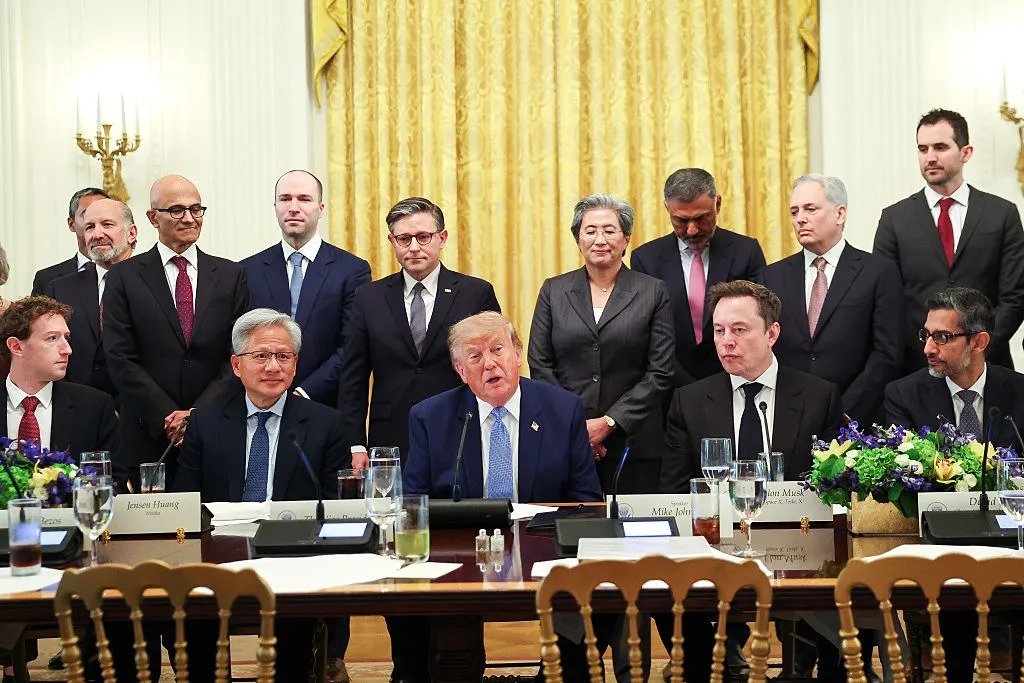
The United States has created a new government force focused on one of the most important technologies in the world, artificial intelligence. President Donald Trump has announced the formation of the Super Intelligence Force, a new group that will coordinate the US government’s efforts to keep America ahead in the global AI race.
The announcement comes just days after Trump signed an executive order directing the US government to stop using the terms “artificial intelligence” and “AI” in most official communications and use “Super Intelligence” and “SI” instead. The new force is therefore part of a much bigger push by the Trump administration to make the United States a leader in the next stage of advanced AI development.
But what exactly is the Super Intelligence Force, who will run it, and what is it expected to do? Here is everything you need to know about Trump’s new AI force.
What Is Trump’s Super Intelligence Force?
The Super Intelligence Force, also called the SIF, is a new US government group created to coordinate the federal government’s work around advanced artificial intelligence.
Trump announced the force on October 4, saying its job is to make sure America continues to lead the world in what his administration now calls “Super Intelligence.” Trump said the technology could be bigger than major technological changes such as the Industrial Revolution and the internet.
In simple terms, the government wants different parts of the US government to work together more closely on AI. Instead of having AI related efforts spread across different departments and agencies, the new force is expected to help coordinate these activities and develop a broader national strategy.
This is especially important because AI is now being used in areas such as software, healthcare, science, defence, finance, education and cybersecurity. Countries that develop powerful AI systems and the infrastructure behind them could gain major economic and strategic advantages.
Who Will Lead the Super Intelligence Force?
The new force will be led by National Intelligence Director Jay Clayton, according to reports cited by TechCrunch and The Wall Street Journal.
Clayton will serve as chair, while Federal Trade Commission Chair Andrew Ferguson, Undersecretary of War for Research and Engineering Emil Michael, and Office of Personnel Management Director Scott Kupor will serve as vice chairs.
The choice of these officials shows that the new force is not being created simply as a technology group.
The people involved have responsibilities covering intelligence, regulation, defence research and the federal workforce. Bringing these areas together suggests that the Trump administration sees advanced AI as something that affects much more than the technology industry.
What Will the Super Intelligence Force Do?
One of the main jobs of the Super Intelligence Force will be to study the opportunities and risks created by advanced AI.
According to reporting on the group’s charter, the force has 120 days to produce a report on the risks and opportunities connected to AI. It is also expected to develop plans for responding to threats enabled by advanced AI while trying to avoid excessive regulation that could slow innovation and competition.
That means the group will not simply be looking at how the US can build better AI systems. It will also consider what could happen if powerful AI systems are used in harmful ways.
For example, advanced AI could potentially affect cybersecurity, national security, misinformation, economic competition and other areas. The government therefore wants to understand these risks while also making sure American companies can continue developing the technology.
Why Is Trump Creating the Force Now?
The timing is important.
The United States and China are competing heavily in artificial intelligence. Both countries have major technology companies, researchers and government programmes working to develop more advanced AI systems.
US officials have increasingly argued that America cannot afford to fall behind in this competition. Jay Clayton previously said that it would be irresponsible for the United States to move away from AI while countries such as China continue advancing the technology. He has also described not being first as one of the major risks.
This explains why the Trump administration is putting so much emphasis on AI leadership.
The government believes that being ahead in AI could bring economic benefits while also strengthening America’s position in science, technology and national security. The Super Intelligence Force is therefore part of a larger effort to keep the US at the front of the global AI race.
Trump Has Also Changed the Name From AI to Super Intelligence
The creation of the Super Intelligence Force comes shortly after another unusual move by Trump.
On September 29, Trump signed an executive order called “Inaugurating the Era of Super Intelligence.” The order says the federal government should use “Super Intelligence” and “SI” instead of “Artificial Intelligence” and “AI” in official communications where legally possible.
The order also says that, for its purposes, “Super Intelligence” refers to the technologies and systems covered by the existing federal definition of artificial intelligence.
In other words, the administration has not created an entirely new type of technology by changing the name. It has mainly changed the terminology the executive branch is expected to use when talking about the technology.
The order says the change is meant to reflect the growing capabilities of modern AI systems, which the administration believes are doing much more than simply copying or automating small parts of human intelligence.
Trump Previously Promised an AI Force
The Super Intelligence Force did not appear completely out of nowhere.
In September, Trump said he was creating an AI Force and planned to appoint an AI czar. At the time, he did not provide many details about what the force would do or how it would operate.
Trump also suggested that people with very high intelligence would be needed for the role, saying that only people with high IQ should apply.
The latest announcement gives that earlier idea a formal name and structure. Instead of simply being called an AI Force, the group is now officially the Super Intelligence Force, matching Trump’s wider effort to rebrand AI as Super Intelligence.
Will the Super Intelligence Force Regulate AI?
This is where things become more complicated.
The force is expected to examine the risks created by advanced AI, but that does not mean Trump is creating a new agency whose main purpose is to regulate AI companies.
In fact, the reported charter says the force should develop ways to respond to threats while preventing overregulation and regulatory capture that could hurt innovation and competition.
This fits with the administration’s broader position that America needs to move quickly in AI rather than create rules that make it harder for American companies to compete.
The balance will be difficult. The government wants companies to move quickly, but it also needs to deal with genuine risks that may come from increasingly powerful AI systems.
What Does This Mean for American AI Companies?
For technology companies in the United States, the new force could have a major impact.
A coordinated government strategy could make it easier for federal agencies to work with AI companies and researchers. It could also help identify areas where the government believes America needs to invest more heavily, such as computing infrastructure, scientific research, cybersecurity and AI development.
The US already has some of the world’s biggest AI companies, including OpenAI, Google, Microsoft, Meta and Anthropic. These companies are spending enormous amounts of money on computing power, data centres and AI research.
A government push to maintain American leadership could therefore support the wider industry. However, companies will also have to pay attention to any new policies or requirements that come from the administration’s AI strategy.
What Does This Mean for China?
China is an important part of the story.
The United States and China are competing to become leaders in advanced AI, and Washington has repeatedly raised concerns about China’s progress in the technology.
The creation of the Super Intelligence Force sends another signal that the US government sees AI leadership as a national priority. The message is simple: America does not want to lose its lead while other countries continue investing heavily in AI.
This competition could accelerate the development of AI in both countries. It could also influence everything from computer chips and data centres to scientific research and national security.
What Could This Mean for the Rest of the World?
The effects of the US AI race will not stay inside America.
AI companies operate globally, and the technology is already being used by businesses, governments and individuals in many countries. Decisions made by the United States about AI development, safety and regulation could therefore influence other countries.
For African countries, including Nigeria, developments in the US AI industry could affect access to AI tools, business opportunities, digital jobs and technology costs.
Nigerian businesses are already using AI for content creation, customer service, software development, marketing, research and other tasks. As AI becomes more powerful, local businesses could gain access to tools that allow small teams to perform work that previously required much larger teams.
At the same time, countries like Nigeria will need to think about their own AI strategies rather than simply waiting for decisions made by larger technology powers.
Is Super Intelligence Different From Artificial Intelligence?
Despite the new name, the technology itself has not suddenly changed because Trump has renamed it.
The executive order defines “Super Intelligence” as the technologies and systems covered by the existing legal definition of artificial intelligence. The name is therefore being used by the administration to describe what it sees as the next stage of increasingly powerful AI systems.
The term “superintelligence” can also have a different meaning in the technology world. Some AI researchers use it to describe hypothetical AI systems that would be much more capable than humans across many areas.
Trump’s executive order uses the term more broadly. It applies it to the technology currently known as artificial intelligence.
This distinction is important because people should not assume that the US government has suddenly created a completely new form of AI simply because the terminology has changed.
The Bigger Picture
The creation of the Super Intelligence Force shows just how important AI has become to governments.
A few years ago, artificial intelligence was mostly discussed as a technology for companies and researchers. Today, governments are treating advanced AI as an issue involving national security, economic growth, scientific research and global competition.
The US government is now trying to coordinate these areas through a dedicated force. Its success will depend on whether it can help America move quickly without ignoring the risks that come with increasingly powerful AI.
The 120 day report will be particularly important because it should provide more details about the group’s plans and recommendations. Until then, many questions about the force’s exact powers, budget and long term role remain unanswered.
The Bottom Line
Trump’s new Super Intelligence Force is another major step in the US government’s growing focus on artificial intelligence.
The group will be led by National Intelligence Director Jay Clayton, with senior officials from areas including technology regulation, defence research and federal personnel serving alongside him. Its early work will focus on understanding the opportunities and risks of advanced AI and developing a plan to keep the United States at the forefront of the technology.
The move also fits into Trump’s wider decision to officially rebrand artificial intelligence as “Super Intelligence” within the federal government. While the name has changed, the technology remains the same under the executive order’s definition.
What happens next will be more important than the name. If the Super Intelligence Force succeeds, it could influence how the United States develops, protects and regulates advanced AI for years to come, and those decisions could eventually affect businesses and technology users around the world.