
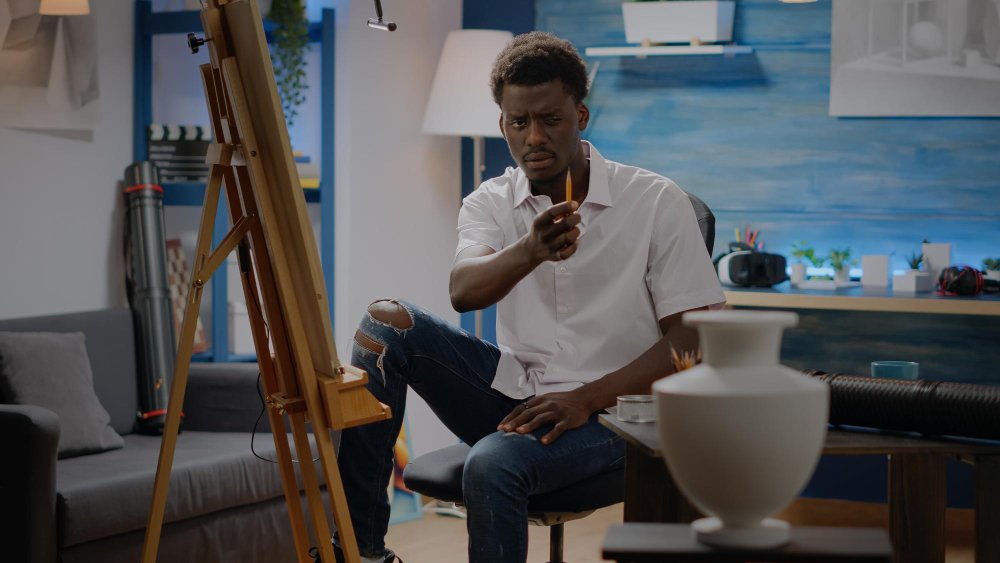
Starting your art journey is exciting, but it can also feel frustrating. You may spend hours on a drawing only to feel disappointed with the result. Then you look at the work of experienced artists and wonder why your own drawings do not look the same.
The truth is that every artist makes mistakes in the beginning. Even professionals struggled with the same problems when they first started learning to draw. The difference is that they learned from those mistakes instead of allowing them to stop their progress.
In this guide, you will learn the common mistakes new artists make and, more importantly, how to avoid them so you can improve faster and enjoy the learning process.
Mistake 1: Expecting to Become Good Too Quickly
One of the biggest mistakes new artists make is expecting instant results. After watching a few tutorials, many beginners believe they should be able to create beautiful drawings within a few days or weeks. When that does not happen, they begin to think they have no talent.
Drawing does not work that way. It is a skill that develops through repetition. Every time you draw, your brain learns how to judge shapes, measure distance, control your hand, and notice small details. These improvements happen slowly, but they build on one another over time.
Social media often makes this problem worse. You usually see finished artwork instead of the hundreds of practice sketches that came before it. Many artists also post only their best work, which creates the false impression that they never struggle.
Instead of expecting perfection, focus on steady progress. Compare your current drawing with one you made a month ago instead of comparing yourself with someone who has practiced for ten years. Small improvements are a sign that your practice is working.
A good habit is to keep every sketch, even the ones you do not like. Looking back at older drawings will show you how much you have improved. That progress is often easier to see over time than from one drawing to the next.
Mistake 2: Skipping the Fundamentals
Many beginners want to jump straight into drawing realistic faces, detailed animals, or action scenes. While that excitement is understandable, skipping the basics usually leads to frustration.
Every great drawing is built on simple skills. Straight lines, circles, cubes, cylinders, proportions, perspective, and shading are the foundation of almost every artwork. If these skills are weak, even the most detailed drawing will not look convincing.
Think of it like building a house. No one starts with the roof. A strong foundation comes first because everything else depends on it. Drawing works in exactly the same way.
Spend time practicing basic shapes before moving on to complex subjects. Learn how light creates shadows. Practice drawing simple household objects from different angles. These exercises may seem easy, but they develop the skills you will use throughout your artistic journey.
Once your fundamentals become stronger, you will notice that difficult drawings become much easier. Instead of guessing how something should look, you will understand why it looks that way.
Mistake 3: Comparing Yourself to Other Artists
Comparison has discouraged more beginner artists than almost anything else. You scroll through social media, see incredible artwork, and immediately feel like giving up.
The problem is that you are comparing your beginning with someone else’s middle or even their finish. What you do not see are the years of practice, failed drawings, and learning that happened behind the scenes.
Every artist learns at a different speed. Some improve quickly in anatomy but struggle with perspective. Others master shading before they become good at proportions. There is no single timeline that everyone follows.
Instead of using other artists as a measure of your worth, use them as a source of inspiration. Study their techniques. Ask yourself what makes their drawings look so good. Try to understand their process instead of feeling discouraged by their results.
The only competition that truly matters is between the artist you were yesterday and the artist you are becoming today. As long as your skills are improving, you are moving in the right direction.
Mistake 4: Practicing Without a Clear Plan
Many new artists spend hours drawing without actually improving. They sketch random subjects every day and wonder why their skills remain the same.
Practice alone does not guarantee progress. What matters is focused practice. If you repeat the same mistakes over and over, those mistakes become habits that are harder to correct later.
A better approach is to give each practice session a specific goal. Spend one day working only on straight lines and circles. Another day, focus on shading. On another day, practice perspective or proportions. Breaking your learning into small topics helps you improve much faster.
It is also helpful to review your work after each drawing. Ask yourself what went well and what could be better. This simple habit teaches you to identify your weaknesses so you know exactly what to practice next.
A structured learning plan often produces better results than simply drawing whatever comes to mind. The more intentional your practice becomes, the faster your skills will grow.
Mistake 5: Being Afraid to Make Mistakes
Many beginners erase every small error before continuing. Others avoid difficult subjects because they are afraid the final drawing will not look good.
This fear slows down learning. Mistakes are not signs of failure. They are signs that you are attempting something new. Every incorrect line teaches you something about proportion, shape, or observation.
Professional artists make mistakes too. The difference is that they treat those mistakes as part of the learning process instead of proof that they cannot draw.
Allow yourself to experiment. Try new techniques. Draw subjects that feel challenging. Some drawings will fail, and that is completely normal. Those unsuccessful drawings often teach you more than the ones that turn out well.
Remember that every page in your sketchbook does not have to become a masterpiece. Your sketchbook is a place to learn, test ideas, and improve without pressure.
Mistake 6: Giving Up Too Soon
Many people quit drawing just before they begin to see real improvement. This usually happens because progress feels slow in the early stages.
Learning to draw is similar to learning a new language. At first, every lesson feels difficult. Then one day, you suddenly realize you understand things that once seemed impossible. Drawing follows the same pattern.
Consistency matters far more than long practice sessions. Drawing for 20 or 30 minutes most days of the week is usually more effective than drawing for six hours once every few weeks.
Motivation will not always be there, but discipline will keep you moving forward. Create a simple routine that fits your schedule. Even small amounts of regular practice add up over months and years.
Celebrate small victories along the way. Maybe your circles are smoother than they were last month. Maybe your shading looks more realistic than before. These small improvements eventually become major breakthroughs.
The artists you admire today did not become skilled because they never struggled. They became skilled because they kept going when drawing was difficult.
Conclusion
Every beginner artist makes mistakes, but those mistakes do not determine your future. What matters is how you respond to them. If you learn from each mistake instead of becoming discouraged, every drawing becomes another step toward becoming a better artist.
The most successful artists are not always the most naturally talented. They are often the ones who stay curious, practice with purpose, and remain patient even when progress feels slow. They understand that every sketch, whether good or bad, teaches an important lesson.
As you continue your journey, remember that improvement is rarely dramatic from one day to the next. It happens through hundreds of small practice sessions that gradually build confidence, skill, and experience. Focus on learning, enjoy the process, and allow yourself the freedom to grow.