
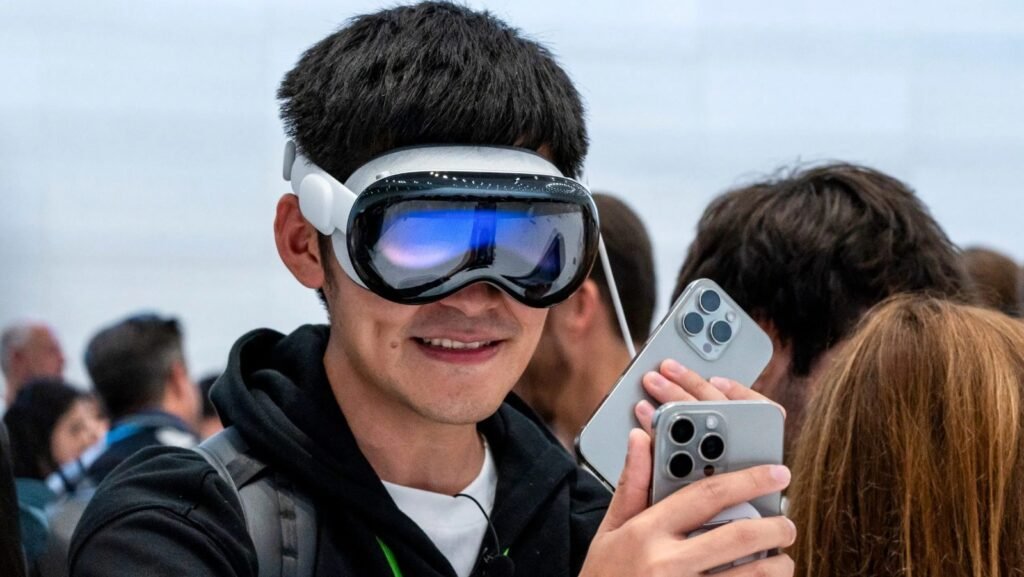
Apple is cutting more than 200 jobs across its Siri, Vision Pro and software teams as the company changes its priorities and puts more attention on artificial intelligence and new devices.
About 100 employees are reportedly affected in Apple’s Vision Products Group, while another roughly 100 jobs are being cut from teams connected to Siri and AI software. Apple has confirmed that the changes are part of a wider effort to reorganise its teams, although the company says it will also create new roles.
The changes are important because they show where Apple may be heading next. The company is not simply reducing staff, it is moving people and resources away from some projects and putting more attention on AI and newer products.
Why Is Apple Cutting More Than 200 Jobs?
Apple says it is changing some of its teams so it can deliver better experiences for its users. The company said that while new roles will be created as part of the changes, some existing jobs will also be affected.
In simple terms, Apple is changing what some employees work on.
Technology companies regularly move workers between projects when their priorities change. A company may decide that one product needs fewer people while another product needs more workers because it has become more important.
That appears to be what is happening at Apple.
The company is dealing with two major challenges at the same time. It needs to improve its artificial intelligence efforts, while also deciding what to do with Vision Pro, an expensive product that has not reached the level of popularity Apple may have wanted.
About 100 Vision Pro Jobs Are Being Cut
One of the biggest parts of the restructuring affects Apple’s Vision Products Group, the team responsible for the company’s work in spatial computing.
Around 100 employees in this group are reportedly losing their jobs. The cuts are particularly important because Apple is also reducing some of the work that made Vision Pro different from other virtual and augmented reality products.
According to reports, Apple is largely shutting down its Vision Pro gaming team and reducing the team responsible for making immersive video content.
This does not mean Apple is immediately cancelling Vision Pro.
Apple is still expected to support the headset and its visionOS software. However, the company appears to be changing how much money and staff it is willing to put into certain Vision Pro projects.
Why Is Apple Scaling Back Vision Pro Work?
The simple answer is that there may not be enough people using the headset to justify some of the costs.
Apple Vision Pro launched in February 2024 with a starting price of $3,499 in the United States. That made it far more expensive than most consumer technology products, and it was always expected to be a product aimed at a smaller group of users.
The problem is that creating special content for a small audience can become very expensive.
Apple’s immersive videos, for example, can cost millions of dollars to produce. If only a small number of people regularly watch them using a Vision Pro headset, it becomes difficult to justify making large amounts of new content.
Apple is therefore expected to produce fewer immersive videos itself and rely more on third-party companies for 3D content.
That is a major change from the early Vision Pro strategy, when Apple promoted immersive video as one of the key reasons to buy the headset.
Vision Pro Has Not Disappeared
It is important not to misunderstand the job cuts.
Apple is not saying that Vision Pro is dead.
The company is still working on visionOS and the Vision Pro platform. What is changing is the amount of effort being put into some areas, particularly gaming and immersive video.
Apple is also reportedly exploring other types of wearable technology.
One area that has attracted attention is smart glasses. Unlike Vision Pro, smart glasses could be smaller, lighter and easier for people to wear throughout the day.
This could give Apple a way to use some of the technology it developed for spatial computing without asking customers to wear a large and expensive headset.
Apple Is Also Cutting Jobs From Siri Teams
The Vision Pro changes are only half of the story.
Apple is also cutting around 100 jobs across Siri and other software teams. One of the affected groups is the Intelligent Systems Experience team, which works on bringing AI into Apple’s devices.
At first, this may seem strange.
Why would Apple cut jobs from Siri and AI teams at a time when the company is trying to become stronger in artificial intelligence?
The answer is that Apple is not necessarily reducing its AI ambitions. Instead, it appears to be changing the way its AI teams are organised.
Apple is creating new positions around its newer AI efforts while removing some existing roles. This means the company can be moving people toward different AI projects rather than simply abandoning AI.
Apple Is Under Pressure to Catch Up in AI
Artificial intelligence has become one of the biggest areas of competition in technology.
Microsoft has invested heavily in AI. Google has Gemini. OpenAI has ChatGPT. Meta is building its own AI systems. Companies such as Anthropic are also competing to build increasingly powerful AI models.
Apple has been slower to move in this area.
The company has introduced AI features through Apple Intelligence and has been working on a more capable version of Siri. However, Apple has faced criticism because some of its AI features have arrived later than similar products from competitors.
Apple’s latest restructuring shows that AI is becoming even more important to its future plans.
The company needs to make Siri smarter, improve how AI works across the iPhone and its other devices, and build systems that can compete with the growing number of AI assistants available to consumers.
The New Siri Could Be Very Important
Siri has been part of Apple’s products for many years, but the way people use AI assistants is changing.
Older voice assistants were mostly designed to answer simple questions, set alarms, send messages and perform basic tasks.
Modern AI assistants can do much more.
They can understand longer questions, work with documents, explain complicated topics, write text, analyse information and help users complete several steps in a task.
Apple wants Siri to move in this direction.
The company has been working on a more advanced AI version of Siri, and the latest job changes suggest that improving AI remains a major priority. Apple is reorganising teams so that it can focus more strongly on these newer capabilities.
Apple May Be Moving Toward Smaller AI Devices
There is another interesting part of Apple’s strategy.
While the company is reducing some Vision Pro work, it is reportedly looking more closely at smart glasses.
Smart glasses could allow Apple to compete with products such as Meta’s smart glasses, which have become one of the more successful examples of consumer wearable technology connected to AI.
The difference between smart glasses and Vision Pro is significant.
Vision Pro is a powerful computer that sits on your face. It offers large virtual screens, immersive video and advanced spatial computing, but it is heavy and expensive.
Smart glasses can be much simpler.
They can potentially provide cameras, microphones, speakers and AI assistance without covering the user’s entire field of view. That makes them more suitable for everyday use.
Reports suggest Apple could be preparing AI powered smart glasses for the future, with a possible product reveal in 2027.
What Does This Mean for Vision Pro Owners?
If you already own a Vision Pro, the latest changes do not mean your headset suddenly becomes useless.
Apple is not abandoning visionOS, and existing users should continue to receive software updates and support.
The bigger question is how much new content and how many major new features Apple will continue to create for the platform.
If Apple produces fewer immersive videos and reduces its investment in gaming, users may have fewer reasons to spend more time inside the Vision Pro ecosystem.
That could create a difficult cycle.
Fewer users can lead to less investment in content. Less content can make the product less attractive to new buyers. Fewer new buyers can then make it harder for Apple to justify large investments in the platform.
Apple will need to find a way to break that cycle if it wants Vision Pro to become a bigger part of its business.
Does This Mean Apple Failed With Vision Pro?
That depends on what Apple wanted Vision Pro to achieve.
The headset may not have become a mass market product, but it gave Apple an opportunity to develop new technology in spatial computing.
Apple was able to learn about new displays, cameras, sensors, hand tracking, eye tracking and 3D experiences.
Those technologies could eventually appear in smaller and cheaper devices.
In that sense, Vision Pro could become a stepping stone rather than the final product Apple wanted to sell to everyone.
The same thing has happened in technology before. Companies sometimes release expensive first generation products that teach them what works, what does not work and what customers actually want.
Apple Is Making a Bigger Bet on AI
The most important message from these job cuts is not that Apple is giving up on technology.
It is that the company is becoming more selective about where it spends its time and money.
Apple is reducing some Vision Pro work while reorganising Siri and AI teams. At the same time, it appears to be looking toward new devices such as smart glasses.
This is a very different strategy from simply putting more people into every project.
Apple has many products, including the iPhone, Mac, iPad, Apple Watch, AirPods and Vision Pro. It cannot give every product unlimited resources.
The company therefore has to decide which technologies could become important over the next five or ten years.
Right now, AI appears to be near the top of that list.
What This Could Mean for Apple’s Future
Apple’s biggest advantage has always been its ability to connect hardware and software.
The company controls the devices, operating systems and services that millions of people use every day.
AI could make that ecosystem even more powerful.
Imagine a future where Siri can understand what is happening on your iPhone, remember what you are working on, control apps, answer questions and help you complete tasks. Now imagine that same AI working through AirPods, a watch or smart glasses.
That is potentially a much bigger opportunity than a single headset.
This may explain why Apple is willing to reduce investment in some Vision Pro projects while putting more attention on AI and newer devices.
The Bottom Line
Apple’s decision to cut more than 200 jobs from its Siri, Vision Pro and software teams is a sign that the company is changing direction. Around 100 jobs are reportedly being cut from the Vision Products Group, while another roughly 100 positions are affected across Siri and AI related software teams.
The Vision Pro cuts appear to show that Apple is becoming more realistic about the headset’s current audience. The company is reducing some expensive gaming and immersive video work while keeping the Vision Pro and visionOS platform alive.
At the same time, Apple is reorganising its Siri and AI teams as it tries to improve its position in the artificial intelligence race.
The bigger story is therefore not simply about layoffs.
Apple is deciding what it wants its future to look like.
For now, that future appears to involve more AI, smarter Siri, and potentially smaller devices such as smart glasses, while Vision Pro moves into a more limited role.
The next few years will show whether this new strategy helps Apple catch up in AI and turn its technology investments into products that millions of people actually want to use.