
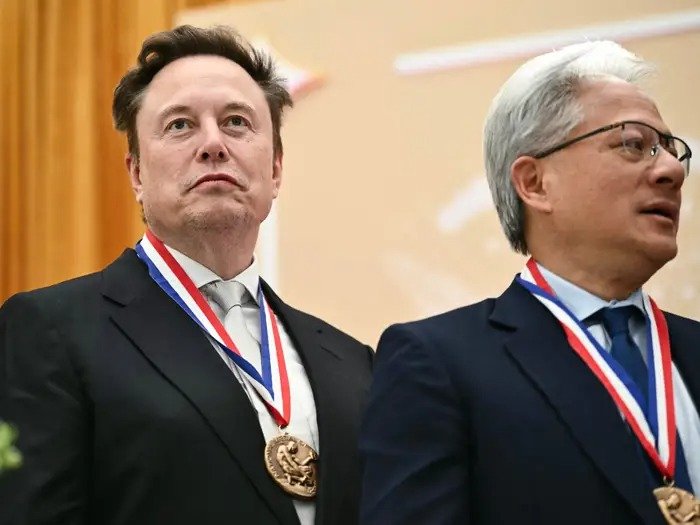
The campaign to bring Jensen Huang back to Nvidia is gaining support from some of the biggest names in the technology industry. Elon Musk, the chief executive of Tesla and SpaceX, has joined other prominent technology figures in backing an open letter asking Nvidia’s board to reinstate its co-founder and former CEO.
The petition argues that Huang should be given a fair hearing while an independent investigation examines the circumstances surrounding his departure. It has attracted significant attention because Huang spent more than three decades building Nvidia into one of the most important companies in the global technology industry.
The campaign also raises a bigger question: can Nvidia maintain its position in the artificial intelligence market without the leader who helped turn it into a global technology giant?
Why Are Elon Musk and Other Tech Leaders Supporting Jensen Huang?
Elon Musk publicly confirmed his support for the campaign on November 13, 2026, through a post on X. He said he was signing the petition calling for Huang’s reinstatement. Musk’s support is significant because his companies, including Tesla and SpaceX, are major users of advanced computing technology, and Nvidia is an important supplier of the chips used in artificial intelligence systems.
Other prominent technology figures have also been linked to the campaign. They include Amjad Masad, the CEO of software development company Replit, Tim Sweeney, the CEO of Epic Games, and Garry Tan, the CEO of startup investment organisation Y Combinator.
These executives represent different parts of the technology industry, from software development and gaming to startup investment. Their support shows that the dispute has attracted attention beyond Nvidia and its shareholders.
However, the campaign is not an official decision by Nvidia’s board. It is an open letter asking the board to reconsider Huang’s departure and allow an independent investigation to establish the facts.
What Does the Petition Want Nvidia to Do?
The campaign, known as Stand with Jensen, is asking Nvidia’s board of directors to bring Huang back while an independent investigation takes place.
Supporters argue that the circumstances surrounding his departure require a fair process. They believe that a leader who spent 33 years building a company should have an opportunity to respond to the concerns raised against him before a final decision is made about his future.
The open letter also asks Nvidia to provide a clearer public explanation of the decision and the process that led to Huang’s departure. In other words, the campaign wants the board to explain what happened, investigate the available evidence and give Huang an opportunity to respond.
The petition gained more than 115,000 signatures by the afternoon of November 14, according to TechCrunch. Other reports put the figure above 150,000 as the campaign continued to attract attention over the following days.
However, the figures should be treated carefully. The petition website allows people to identify themselves as Nvidia employees, former employees and shareholders, but those affiliations have not been independently verified. The presence of a large number of signatures does not automatically mean that every person listed has a confirmed connection to the company.
Why Did Jensen Huang Leave Nvidia?
Jensen Huang’s departure followed reports about his personal relationships and concerns involving a businesswoman whom US intelligence officials reportedly suspected of having links to Chinese intelligence.
According to reports, Huang acknowledged having an affair with the woman. The situation attracted attention because of the national security concerns surrounding the allegations and the possibility that his personal relationship could raise questions about access to sensitive business information.
It is important to separate the reported facts from the allegations. The claim that the woman was connected to Chinese intelligence has not been established as a proven finding of espionage. A suspicion raised by intelligence officials is not the same as proof that someone committed a crime.
Reports also raised questions about other personal relationships involving Huang. These developments created pressure around his position at Nvidia and raised concerns about the company’s leadership and reputation.
Huang resigned on November 12, 2026, as Nvidia’s president, chief executive and board member. Nvidia’s chief financial officer, Colette Kress, was appointed interim CEO while the company considers its next leadership arrangements.
His departure ended a 33-year period in which he led the company he co-founded. The circumstances have now created a dispute over whether Nvidia should accept his resignation or consider bringing him back after a fair investigation.
Why Jensen Huang Is So Important to Nvidia
To understand why so many technology leaders want Huang back, it is necessary to understand what he built at Nvidia.
Huang co-founded Nvidia in 1993 with Chris Malachowsky and Curtis Priem. The company initially focused on graphics processing technology, particularly chips used in computers and video games. Over time, Nvidia expanded into other areas of computing and became a major supplier of chips used in artificial intelligence.
One of Nvidia’s biggest advantages is its graphics processing units, commonly known as GPUs. These chips can perform many calculations at the same time, making them useful for tasks such as training and running AI models.
As artificial intelligence became more important, demand for Nvidia’s chips increased sharply. Technology companies building AI systems need powerful computing equipment, and Nvidia became one of the leading suppliers of that technology.
The company also developed CUDA, a software platform that allows developers to use Nvidia GPUs for different computing tasks. This helped create a large ecosystem of developers and businesses that build their products around Nvidia technology.
Huang’s leadership played a major role in guiding this growth. He helped Nvidia move beyond its original gaming market and position itself at the centre of the global AI industry.
This explains why his departure has attracted so much attention. For many technology leaders, Huang is not simply another company executive. He is a central figure in the development of the modern AI computing industry.
What Happens to Nvidia Without Jensen Huang?
Nvidia is one of the most important companies in the AI industry, and its future leadership decisions could affect the wider technology market.
The company sells chips and computing systems to businesses developing AI models, cloud services, autonomous driving technology and other advanced products. Its customers include some of the world’s largest technology companies.
A sudden leadership change can create uncertainty for investors, employees, customers and business partners. Investors may want to know whether the new leadership can maintain the company’s growth, while customers may be interested in whether Nvidia’s product plans and business relationships will remain stable.
However, Nvidia is not a company built around one person alone. It has thousands of employees, experienced executives, engineers and established business operations. Its technology, customer relationships and software ecosystem will not disappear simply because Huang has left the company.
The challenge is finding someone who can maintain the company’s direction while managing its growing responsibilities in the global technology market.
Colette Kress is currently serving as interim CEO. Nvidia will need to determine whether to appoint a permanent leader from within the company or bring in someone from outside.
The board’s decision will be important because Nvidia operates in a highly competitive market. Companies such as AMD, Intel and several major technology firms are investing heavily in AI chips and computing infrastructure. Nvidia needs stable leadership to protect its market position.
Can Elon Musk and the Petition Force Nvidia to Bring Huang Back?
The petition may increase pressure on Nvidia’s board, but it cannot force the company to reinstate Huang.
The responsibility for choosing the company’s CEO rests with its board of directors. The board must consider the company’s interests, legal responsibilities, corporate governance rules and the evidence available to it.
Public support from influential technology executives can make the issue more difficult to ignore. It can also send a message to Nvidia that some business leaders and investors believe Huang’s departure could have serious consequences.
However, the petition’s signature count does not represent a formal vote by Nvidia shareholders. Even if hundreds of thousands of people sign it, the board is not legally required to follow their demand.
There is also an important difference between supporting Huang’s right to a fair investigation and agreeing that he should automatically return as CEO. Some supporters may believe he deserves an opportunity to respond to the allegations without necessarily concluding that reinstatement is the only possible outcome.
For Nvidia, the priority will be to make a decision that protects the company and maintains confidence among investors, employees and customers.
What the Dispute Means for the Future of the AI Industry
The situation involving Huang goes beyond Nvidia because the company plays a major role in the development of artificial intelligence.
Many AI companies depend on Nvidia hardware to train and operate their models. Cloud computing providers also purchase Nvidia chips to build the data centres used by businesses and developers around the world.
This means that major changes at Nvidia can attract attention across the technology industry. A leadership crisis could create uncertainty about the company’s future direction, although it does not automatically mean that its chip production or AI business will be disrupted.
The dispute also highlights the importance of corporate governance in technology companies. Even when a founder has played a major role in building a successful business, the board still has a responsibility to protect the company and ensure that its leaders meet the required standards.
For investors, the situation is a reminder that business performance is not determined by technology alone. Leadership, public trust, risk management and corporate decision-making also matter.
Nvidia’s next steps will therefore be watched closely by investors, technology companies and the wider AI industry.
The Bottom Line
Elon Musk and other technology leaders are supporting a campaign to bring Jensen Huang back to Nvidia after his resignation on November 12, 2026. The petition argues that Huang should receive a fair hearing and that the company should allow an independent investigation to establish the facts surrounding his departure.
The campaign has attracted significant attention, but it does not mean Nvidia has agreed to reinstate its former CEO. The final decision rests with the company’s board, which must consider the available evidence and the long-term interests of the business.
Huang’s importance to Nvidia cannot be ignored. He helped transform the company from a graphics chip manufacturer into one of the world’s most important suppliers of AI computing technology. His departure creates a major leadership challenge at a time when demand for Nvidia’s products remains closely tied to the growth of artificial intelligence.
Whether Huang returns or Nvidia appoints a new CEO, the decision will be important for the company’s future. It will also provide a clear example of how leadership, corporate governance and public trust can shape the direction of even the most successful technology businesses.