
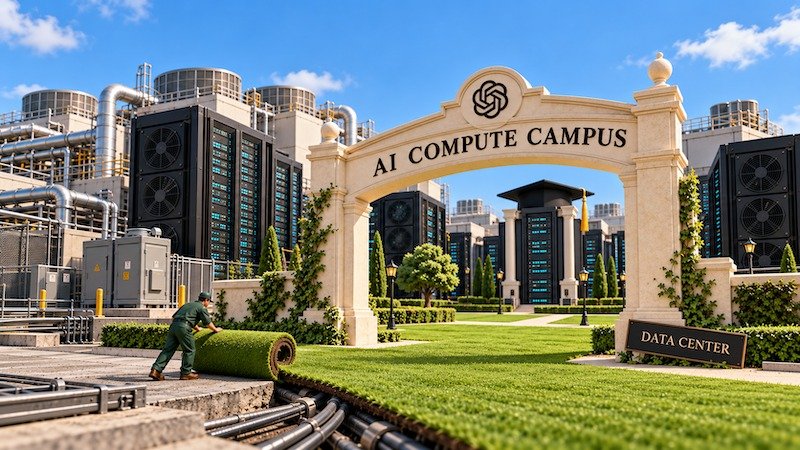
OpenAI is considering a new name for the large facilities that power its artificial intelligence services. Instead of calling them data centers, the company wants to promote the term AI compute campuses. The proposed change comes at a time when large technology companies are facing growing public opposition to building these facilities because of concerns about electricity use, water consumption, environmental damage, and their effects on nearby communities.
The idea may sound like a simple change of words, but there is a bigger issue behind it. OpenAI wants to improve how people see the infrastructure needed to power artificial intelligence. The company believes these facilities should be understood as more than buildings filled with computers. However, whether a new name will change public opinion is another question.
Why Does OpenAI Want to Rename Its Data Centers?
The proposed name change is part of a wider effort by OpenAI to influence public discussions about artificial intelligence and the infrastructure needed to support it.
According to reporting by Axios, OpenAI is preparing a public relations campaign following the United States midterm elections scheduled for November 3, 2026. The campaign is expected to focus on several issues, including how people view AI, how governments should regulate it, and how technology companies can build public support for their projects.
Chris Lehane, OpenAI’s Chief Global Affairs Officer, discussed some of these plans with Axios. One of the ideas mentioned was promoting the name AI compute campuses instead of the traditional term data centers.
The reason is connected to the growing negative attention surrounding data center construction. Many communities are concerned about the effects of having enormous computing facilities built near their homes. OpenAI appears to believe that a different name could help people understand the wider role these facilities play in the AI industry.
The company has also explained that the term compute campuses better describes the scale and role of the infrastructure it is building. These projects involve more than computer servers. They also require power systems, land, construction work, cooling equipment, and skilled workers.
However, it is important to understand that this is a proposed branding and communication approach, not a change to the physical facilities themselves.
What Are AI Compute Campuses?
An AI compute campus is essentially a large facility designed to provide the computing power needed to develop and operate artificial intelligence systems.
To understand this, think about how ChatGPT works. When someone asks ChatGPT a question, the system needs powerful computers to process the request and generate a response. These computers are not sitting inside an ordinary office or on the user’s phone. They operate in large data centers containing thousands of specialised computer chips and other equipment.
AI compute campuses are designed to provide this computing power on a much larger scale. They may contain several buildings filled with servers, advanced cooling systems, electrical equipment, backup power systems, and other infrastructure.
The word compute refers to the processing work that computers perform. In artificial intelligence, this includes training AI models, processing user requests, analysing information, and running the systems behind AI applications.
The word campus is commonly used to describe a large area containing several connected buildings or facilities. By using the term AI compute campus, OpenAI wants people to see these projects as large technology and infrastructure developments rather than simply warehouses filled with computers.
In practical terms, however, the basic purpose remains the same. These facilities provide the computing resources that AI companies need to operate their services.
Why Are Data Centers Becoming Unpopular?
The rapid growth of artificial intelligence has increased the demand for computing power. Companies such as OpenAI, Microsoft, Google, Amazon, and Meta are investing heavily in the infrastructure needed to support their AI products.
This has created a problem. Building and operating large data centers requires enormous amounts of electricity, water, land, and other resources. As more facilities are planned, people living near proposed construction sites are asking questions about how these projects will affect their communities.
1. High Electricity Consumption
One of the biggest concerns is electricity consumption. AI data centers contain thousands of powerful computer chips that need electricity to operate continuously. These systems also require cooling equipment to prevent the computers from overheating.
As a result, large data centers can consume as much electricity as thousands of homes. When several facilities are built in the same area, the demand on the local electricity network can increase significantly.
Residents worry that this additional demand could put pressure on electricity supplies and lead to higher electricity bills. Some communities also question whether their existing power infrastructure can support these projects without affecting other customers.
2. Water Consumption
Water is another major concern. Many data centers use water-based cooling systems to control the temperature of their equipment. The amount of water required depends on the facility’s design, location, cooling technology, and operating conditions.
This can become a serious issue in areas that already experience water shortages. Residents may question why large technology companies should receive access to significant amounts of water when local households and businesses also depend on the same resources.
Not every data center uses the same amount of water, and some companies are developing alternative cooling methods. However, water consumption remains an important issue in discussions about new facilities.
3. Environmental Impact
The environmental impact of data centers is also attracting attention. Their electricity demand can increase carbon emissions when the power comes from fossil fuels such as coal and natural gas.
Construction also requires land, building materials, roads, electrical equipment, and other resources. Depending on the location and design, these projects can affect local ecosystems and create additional environmental pressure.
Technology companies often point to renewable energy investments and improved cooling systems as ways to reduce these effects. However, communities want clear information about how much energy and water a facility will use and what the company plans to do to reduce its environmental impact.
4. Noise and Local Disruption
Large data centers can also affect the daily lives of people living nearby. Cooling equipment, generators, construction activities, and heavy vehicles can create noise and other disturbances.
Residents may also worry about changes to their neighbourhoods, including increased traffic and the use of large areas of land for industrial development. These concerns can lead to protests, public meetings, and opposition to proposed construction projects.
For many communities, the issue is not simply whether artificial intelligence is useful. They want to know whether the benefits of hosting these facilities are worth the impact on their environment and daily lives.
Why OpenAI Needs More Data Centers
OpenAI’s interest in building more computing infrastructure is connected to the growing demand for its AI products.
Services such as ChatGPT require powerful computing systems to answer questions, generate images, analyse documents, write code, and perform other tasks. As more individuals and businesses use these services, OpenAI needs additional computing capacity to handle the demand.
The company also needs computing power to train more advanced AI models. Training involves processing enormous amounts of information using specialised computer chips. This work requires large amounts of electricity and computing resources.
OpenAI has been expanding its infrastructure through Stargate, a long-term project announced in January 2025 with partners including SoftBank and Oracle. The project was introduced as an effort to develop large-scale AI infrastructure in the United States.
In April 2026, OpenAI said it had already surpassed its initial target of securing 10 gigawatts of AI infrastructure in the United States by 2029. The company also said it had added more than 3 gigawatts of capacity in the previous 90 days.
This shows why OpenAI is interested in building more facilities. The company believes that the future growth of artificial intelligence depends on having enough computing power to support it.
However, expanding this infrastructure also means dealing with the concerns of the communities where the facilities will be built.
OpenAI Is Planning More Than a Name Change
The proposed AI compute campus name is only one part of OpenAI’s wider plan to influence how people think about artificial intelligence.
According to Axios, Chris Lehane discussed several other ideas that the company wants to bring into the public conversation. These include developing AI speed limits, helping people understand how AI can improve their daily lives, and encouraging the United States to play a role in creating international AI standards.
The idea of AI speed limits involves discussing ways to manage how quickly powerful AI systems are developed and released. It is part of a wider debate about balancing technological progress with safety and responsible development.
OpenAI also wants people to see AI as a technology that can help them rather than simply replace their jobs or create new problems. This is important because concerns about job losses, misinformation, safety, and the control of powerful AI systems are becoming more common.
Lehane also described public discussions about data centers as healthy. He argued that communities hosting these facilities should be able to hold companies responsible and receive meaningful benefits from the projects.
This suggests that OpenAI understands that changing the way it describes its infrastructure may not be enough. Companies also need to address the concerns people have about the actual projects.
Other Technology Companies Are Facing the Same Problem
OpenAI is not the only technology company dealing with public opposition to data center construction.
Microsoft, Amazon, Google, and Meta are also investing heavily in facilities to support cloud computing and artificial intelligence. As these companies expand their infrastructure, they face questions about electricity consumption, water use, environmental effects, and transparency.
For example, Amazon and Microsoft have said they will no longer use non-disclosure agreements in their negotiations with local governments over data center projects. Non-disclosure agreements, commonly called NDAs, are legal agreements that restrict people from sharing certain information.
The decision to move away from these agreements is important because residents and community groups want more information about projects that could affect their neighbourhoods. They want to understand how much electricity a facility will use, what it means for local resources, and who will pay for the infrastructure needed to support it.
Technology companies are also making commitments to support communities through investments in local infrastructure, education, employment, and other development projects.
These efforts show that the data center debate is becoming more than a technical issue. It is also about public trust, local development, and whether technology companies are willing to share the benefits of their investments.
Will Calling Them AI Compute Campuses Solve the Problem?
Probably not on its own.
Changing the name of a data center does not reduce its electricity consumption, lower its water use, or remove the noise created by its cooling equipment. The physical effects of the facility remain the same, regardless of what the company calls it.
However, the new name could help explain the wider role of these facilities. An AI compute campus is not just a building containing computers. It is a major infrastructure project that may involve electrical systems, construction companies, engineers, technicians, and other skilled workers.
The name could also help OpenAI communicate the economic opportunities associated with these projects. Large facilities can create construction jobs, support local businesses, and encourage investment in electricity and other infrastructure.
But people are likely to judge these projects based on what they experience, not simply what companies call them. If a facility increases pressure on local electricity supplies, consumes too much water, or creates environmental problems, a new name will not remove those concerns.
For OpenAI, the real challenge is to demonstrate that its infrastructure projects can deliver benefits without placing an unfair burden on the communities hosting them.
The Bottom Line
OpenAI’s plan to promote the name AI compute campuses reflects a growing challenge facing the artificial intelligence industry. Companies need more computing power to develop and operate AI services, but building the facilities required to provide that power is becoming increasingly controversial.
The proposed name change is part of a wider public relations effort to improve how people understand AI infrastructure and its role in the economy. OpenAI is also discussing issues such as AI safety, global standards, and how the technology can benefit ordinary people.
However, the success of this approach will depend on more than branding. Communities want affordable electricity, responsible water use, environmental protection, transparency, and real economic benefits from the projects built in their areas.
Calling a data center an AI compute campus may change how the project is described, but only responsible construction and meaningful community benefits can change how people experience it.