
AI generated art has become one of the biggest changes in the creative world. Today, anyone can type a few words into an AI tool and get an image that may look like it was created by a professional artist. But as these tools become more powerful, a bigger question is being asked: is AI generated art really the same as art created by a human?
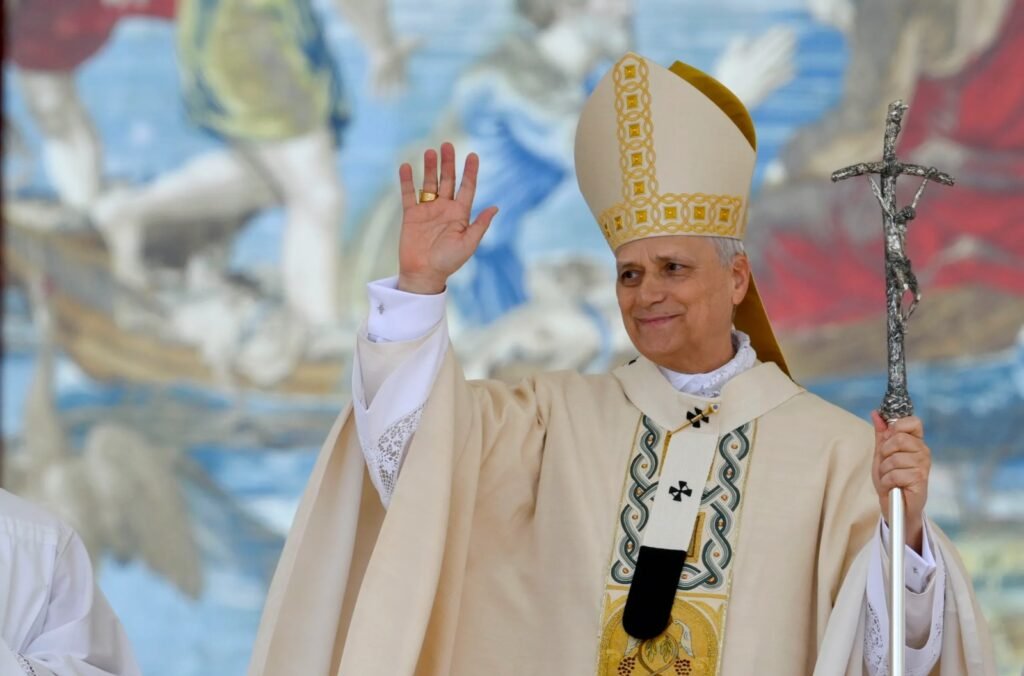
Pope Leo XIV has now entered that conversation, and his position is clear. Speaking to artists and curators at the Vatican on October 2, 2026, the Pope said there is an important difference between human art and what machines produce. He called on the Catholic Church to renew its relationship with artists and help protect human creativity in the age of artificial intelligence.
His comments are important because the debate around AI generated art is no longer limited to artists, technology companies and people on social media. Questions about creativity, copyright, human work and the role of machines are now being discussed by religious, cultural and political institutions around the world.
What Did Pope Leo XIV Say About AI Generated Art?
Pope Leo XIV made his comments while speaking to artists and curators taking part in an event called “The Art of Possibility: Weaving Together.” The meeting was organised by the Vatican’s Dicastery for Culture and Education.
The Pope said the Church needs artists, especially at a time when artificial intelligence is becoming part of everyday life. He argued that people need to be able to tell the difference between art created by humans and content produced by machines.
He went further by saying that there is an “ontological difference” between human art and what a machine can create. In simple words, he was saying that the difference is not only about whether the final image looks good or bad. He believes there is a deeper difference between something created by a human being and something produced by a machine using calculations based on existing images.
Pope Leo Says AI Lacks the Human Spark
One of the main points in Pope Leo XIV’s statement was his belief that AI does not have the same human quality behind genuine artistic creation.
He said algorithms lack the “spark of humanity.” His argument is that AI systems can process huge amounts of information and create new looking images, but they do not have human experiences, emotions, memories or personal struggles behind what they produce.
This is an important part of the AI art debate. When a human artist creates a painting, song, photograph or sculpture, the work can be influenced by that person’s life, culture, memories, feelings and experiences. An AI system does not experience the world in the same way.
This does not mean AI cannot produce impressive images. In fact, modern AI image generators can create highly detailed pictures in seconds. Pope Leo’s point is about the difference between the appearance of a finished image and the human experience behind artistic creation.
Why Is Pope Leo XIV Concerned About AI Art?
The Pope’s concern goes beyond whether AI generated images look realistic.
He spoke about the importance of protecting human creativity and avoiding a world where everything becomes similar. He described art as something that can make people slow down, think and look at the world differently instead of simply consuming information as quickly as possible.
That concern is relevant to the wider discussion about artificial intelligence. AI tools are trained using huge amounts of existing information and can produce content very quickly. If millions of people use the same tools and similar prompts, there are questions about whether creative work could start to look more similar over time.
Human artists, however, can make unusual choices based on their own experiences and ideas. Their work can also reflect a particular culture, place, period or personal story.
AI Can Create Art, But What Does That Mean?
One reason AI generated art has become so controversial is that the technology can produce results that look surprisingly human.
A person with no drawing skills can describe an image and receive a detailed result within seconds. Someone who has never used professional design software can create posters, illustrations, characters and other visual content without learning traditional art techniques.
This has opened new opportunities for people and businesses. A small business owner, for example, can use AI to create an image for a social media post without hiring a designer for every simple task. A writer can use AI to create a visual concept for an article, while a developer can use it to quickly test ideas.
But the growth of AI art has also created serious questions about human artists. If a company can generate hundreds of images quickly and cheaply, it may decide that it no longer needs to hire artists for certain types of work.
That is one reason the debate is bigger than whether an AI image looks good. It also involves jobs, income, copyright, ownership and the future of creative work.
Pope Leo Wants the Church to Work With Artists
Pope Leo XIV did not simply attack artificial intelligence during his address.
Instead, he called for a stronger relationship between the Catholic Church, artists and cultural organisations. He said the Church wants to work alongside artists to protect what he described as the value of human creativity and humanity.
This is an important distinction. His message was not simply that technology should disappear or that people should stop using AI tools.
The wider message was that technological progress should not cause people to forget the importance of human beings. In his view, artists have a special role because art can communicate things that cannot always be reduced to facts or simple answers.
The Pope’s Earlier Concerns About Artificial Intelligence
Pope Leo XIV’s comments about AI generated art are not coming out of nowhere.
The Pope has previously spoken about artificial intelligence and its effect on human dignity. In a May 2026 encyclical, he discussed the need to keep human beings at the centre of a world where automation and artificial intelligence are becoming more powerful.
He has also acknowledged that AI can have useful applications. In a September 2026 address to the Pontifical Academy of Sciences, he said AI could contribute to scientific discoveries, technological progress, medicine, food systems, energy and new forms of human creativity and cooperation. At the same time, he warned about risks including surveillance, manipulation, discrimination and other dangers when powerful technologies are used without proper safeguards and human oversight.
So his position is more complicated than simply being against artificial intelligence. He recognises that AI can be useful while also arguing that society needs to think carefully about how the technology affects people.
Why AI Generated Art Is Becoming a Bigger Issue
The AI art debate has grown rapidly because image generation tools have become much easier to use.
A few years ago, creating professional looking digital artwork required knowledge of design software and often years of practice. Today, a person can enter a short description into an AI tool and receive several images almost immediately.
This has changed the creative industry. Businesses can produce marketing images faster, content creators can experiment with new ideas and ordinary users can make pictures for fun. At the same time, professional artists have raised concerns about how AI companies obtain training material and whether artists should be paid when their work contributes to systems that generate competing content.
There is also the question of disclosure. When someone sees a beautiful image online, they may assume a human artist created it. AI generated content can make that assumption much harder to make.
What Does This Mean for Artists?
For artists, the rise of AI does not necessarily mean that human creativity is disappearing.
There are already many situations where people still want something personal and original. A customer may want a portrait that captures a real person’s personality. A company may want a unique brand identity. A filmmaker may need an artist who understands a particular story and can work with a creative team.
AI can produce an image, but the person using it still decides what they want to communicate. That means human creativity can remain important even as AI becomes better at producing the actual visual output.
However, the technology is likely to change the kind of work artists do. Some simple tasks may become automated, while skills such as creative direction, storytelling, editing, cultural understanding and original thinking could become even more important.
What Does This Mean for Businesses?
Businesses are already using AI generated images because the technology can save time and money.
A small Nigerian business, for example, can use AI to create an early concept for a product advert or social media graphic. Instead of starting from nothing, the business owner can use the image as a starting point and then have a designer improve it.
This can be useful for businesses with small budgets. However, companies also need to think about copyright, licensing and whether the AI tool they are using allows commercial use of its output.
Businesses should also avoid assuming that AI generated content is automatically better. A professional human designer may still understand a brand’s customers, culture and message in ways that a general AI tool cannot.
Is Pope Leo XIV Saying People Should Stop Using AI?
Not exactly.
Pope Leo XIV’s comments focused on the difference between human art and machine generated content and the need to protect human creativity. He did not announce a ban on AI generated art, nor did he say that every use of AI in creative work should be rejected.
His argument is mainly about recognising what makes human creativity different. He wants people and institutions to remember that art can carry human experiences, questions and emotions that are not the same as the output of an algorithm.
That leaves room for people to use AI as a tool while still placing value on human artists and human creativity.
The Bigger Debate About AI and Human Creativity
The discussion around AI generated art is part of a much bigger question about the future of artificial intelligence.
AI can now write, draw, make music, analyse documents, write computer code and perform many other tasks that were once considered uniquely human. As these systems become better, society has to decide how they should be used and where human involvement should remain important.
Pope Leo XIV is approaching that question from a religious and human centred perspective. Technology companies may look at AI mainly through the lens of productivity and innovation, while artists may focus on creativity, ownership and jobs.
These views do not always have to cancel each other out. AI can be useful while society still protects human creativity, gives artists fair opportunities and makes it clear when content has been generated by machines.
The Bottom Line
Pope Leo XIV has now made his position on AI generated art clear. He believes there is a fundamental difference between art created by human beings and content produced by machines, and he wants that difference to remain visible as artificial intelligence becomes more powerful.
His comments also show that the AI debate is moving beyond technology companies and software developers. Artists, religious leaders, businesses, governments and ordinary users are all beginning to ask what should happen when machines become capable of producing work that looks increasingly human.
AI generated art is not going away. The bigger question is how society chooses to use it without losing the value of the human creativity that made art important in the first place.
For artists and businesses, the lesson may be simple. AI can be a powerful tool, but the human idea, story, experience and purpose behind creative work still matter.