
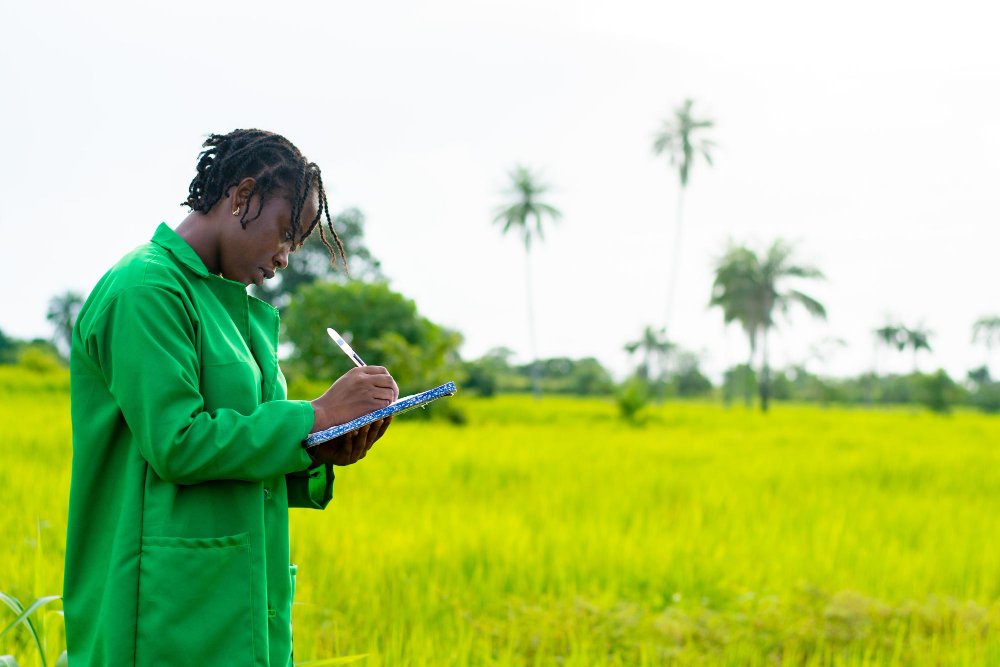
Agriculture is one of the biggest business opportunities in Nigeria. With millions of people needing food every day, businesses involved in farming, livestock, aquaculture, processing, storage and agricultural exports can generate strong returns.
However, not every agricultural business is equally profitable. Some businesses can generate returns within a few weeks or months, while others require several years before they become highly profitable. Your capital, location, experience, management and access to buyers can also determine how much money you make.
If you are looking for a profitable agricultural business to start in Nigeria in 2026, here are 10 options worth considering.
1. Poultry Farming
Poultry farming remains one of the most attractive agricultural businesses in Nigeria because of the strong demand for chicken and eggs.
You can focus on broilers, which are raised mainly for meat, or layers, which are raised for egg production. Broilers can reach market size in about 6 to 8 weeks under good management, making poultry attractive to people looking for relatively quick business cycles.
A small poultry farm can be started with a few hundred thousand naira, while larger operations require millions of naira. Depending on management, feed costs, mortality, selling price and market conditions, poultry farming can generate strong returns per production cycle.
Demand can also increase during festive periods when more people buy chicken.
The major challenge is the cost of feed. Poor disease management, expensive inputs and lack of a ready market can quickly reduce profit.
Best for: Entrepreneurs looking for a relatively fast agricultural business.
2. Catfish and Fish Farming
Fish farming is another agricultural business with strong potential in Nigeria. Catfish is especially popular because it is widely consumed by households, restaurants, hotels and food businesses.
Catfish can be raised in concrete ponds, earthen ponds or tarpaulin tanks. This makes it possible to operate a fish farm even with limited land if the right system is used.
Depending on the production system and scale, a small fish farm may require several hundred thousand naira to establish. Catfish can take roughly 4 to 6 months to reach market size.
Feed is one of the biggest expenses, so farmers need to monitor feeding carefully. Good quality fingerlings, clean water, proper stocking density and disease prevention are also important.
Selling directly to restaurants, hotels, consumers and fish sellers can improve your margins.
Best for: Entrepreneurs who want an intensive agricultural business that can operate in both urban and rural areas.
3. Snail Farming
Snail farming is one of the agricultural businesses that can be started with relatively little capital and space.
Unlike some forms of livestock farming, snail farming does not require large buildings or expensive equipment. Snails can also be fed with suitable plant materials and other affordable feeds.
A small snail farm can potentially be started with tens or hundreds of thousands of naira, depending on the size of the operation.
The major advantage is that snails can multiply over time, allowing a farmer to build stock instead of constantly buying new animals.
However, snail farming requires patience. Farmers need to provide suitable housing, moisture, protection from predators and good feeding conditions.
There is demand for snails in Nigeria, particularly among households, restaurants and food businesses. Larger opportunities can also exist in processing and export.
Best for: Beginners with limited capital, land or space.
4. Oil Palm Cultivation and Processing
Oil palm is a long-term agricultural investment with significant income potential.
Nigeria has strong demand for palm oil and other products obtained from the oil palm tree. Farmers can earn from palm fruits, palm oil, palm kernel and other by-products.
Unlike poultry or vegetable farming, oil palm requires patience. Properly established plantations can begin producing after a few years and continue producing for many years.
Improved seedlings, good land preparation, proper spacing, weed control and regular farm maintenance can significantly affect production.
There is also an opportunity to make more money through processing. Instead of selling only harvested fruits, an entrepreneur can process them into palm oil and other products.
The main disadvantage is the waiting period and the initial cost of establishing a plantation.
Best for: Investors interested in long-term agricultural wealth.
5. Cassava Farming and Processing
Cassava is one of Nigeria’s most important food and industrial crops. It is used for products such as garri, cassava flour and starch.
This creates opportunities at different stages of the value chain. You can grow cassava, buy from farmers, process it or combine production with processing.
Selling raw cassava can be profitable, but processing can create additional value. For example, cassava can be processed into garri or flour and packaged for consumers and businesses.
This is why cassava processing can be more attractive than simply selling harvested roots.
Entrepreneurs should consider access to farmland, processing equipment, electricity or alternative energy, transportation and nearby markets before starting.
Best for: Medium-scale farmers and entrepreneurs interested in value addition.
6. Vegetable and Tomato Farming
Vegetable farming can provide relatively quick returns because many vegetables have short production cycles.
Tomatoes, ugu and other leafy vegetables have strong demand in Nigerian markets. Farmers who produce vegetables efficiently can sell to households, restaurants, food vendors, supermarkets and market traders.
One major opportunity is off-season production. When supply falls, prices can rise, creating an opportunity for farmers who have reliable irrigation and can continue producing.
Greenhouse and other intensive farming systems can also help entrepreneurs produce crops in controlled environments and make better use of limited land.
However, vegetables are highly perishable. Poor storage, transportation problems and market gluts can lead to significant losses.
A farmer should therefore identify buyers before planting on a large scale.
Best for: Entrepreneurs looking for faster crop production and people with access to reliable water and nearby markets.
7. Cashew Production and Processing
Cashew is another agricultural business with strong long-term potential in Nigeria.
The crop has both domestic and international demand, creating opportunities for farmers, aggregators, processors and exporters.
An entrepreneur can establish a cashew plantation or participate in the buying and aggregation of raw cashew nuts from farmers.
Processing can create even more opportunities. Instead of selling only raw cashew nuts, processors can produce cashew kernels and other finished products for higher-value markets.
However, establishing a plantation requires patience because cashew is a long-term crop. Location, land quality, seedlings, farm management and access to buyers are important considerations.
Best for: Long-term investors and entrepreneurs interested in agricultural exports.
8. Cocoa Farming and Value Addition
Cocoa remains one of Nigeria’s most important high-value agricultural commodities.
The global demand for cocoa creates opportunities for farmers and businesses involved in production, aggregation, processing and export.
A cocoa farmer can earn from the sale of cocoa beans, while processors can create additional products such as cocoa powder, cocoa butter and cocoa liquor.
Cocoa farming is not a get-rich-quick business. Establishing a productive plantation takes time, and farmers need to manage diseases, pests, weeds and soil conditions properly.
For investors willing to wait, however, cocoa can become a valuable long-term agricultural asset.
Best for: Investors interested in long-term farming and agricultural value addition.
9. Sesame Seed Production, Storage and Export
Sesame is another agricultural commodity with strong export potential.
Nigeria produces sesame for both local and international markets, creating opportunities for farmers, commodity traders, aggregators and exporters.
One interesting part of the business is that you do not necessarily have to grow the crop yourself. An entrepreneur can buy sesame from farmers, aggregate it, store it properly and sell when market conditions are favourable.
However, commodity prices can change quickly. Quality, storage conditions, market timing and access to reliable buyers are therefore important.
Export businesses also require a proper understanding of quality requirements, documentation and international trade.
Best for: Farmers and entrepreneurs interested in commodity trading and agricultural exports.
10. Mushroom Farming and Agro-Processing
Mushroom farming is a relatively specialised agricultural business that can be operated with limited space.
Oyster mushrooms and other varieties can be produced in controlled environments, making the business suitable for entrepreneurs who do not have large farmland.
Mushrooms can also have short production cycles and may attract premium prices in urban markets.
Beyond mushroom farming, agro-processing provides another major opportunity.
Entrepreneurs can process agricultural products such as palm fruits, cassava, tomatoes and fish instead of selling them in their raw form.
For example, businesses can produce garri, process palm oil, smoke fish, package vegetables or process tomatoes.
The central idea is simple: do not only produce agricultural products, look for ways to increase their value.
Best for: Entrepreneurs interested in specialty agriculture, processing and value addition.
Which Agricultural Business Has the Highest ROI in Nigeria?
There is no single agricultural business that will always have the highest return for everyone.
The best option depends on your capital, location, experience, market and how quickly you need your money back.
If you want relatively fast returns, poultry, fish farming, vegetables and mushrooms can be attractive options.
If you have limited starting capital, snail farming and intensive vegetable production may be easier to enter.
If your goal is long-term wealth, oil palm, cocoa and cashew can be more suitable.
If you are interested in value addition, cassava processing, palm oil processing, fish processing and agricultural exports can provide additional opportunities.
How to Choose the Right Agricultural Business
Before investing your money, ask yourself five important questions.
How much money do I have?
Do not choose a business simply because someone claims it can generate a high return. Choose one you can properly finance.
How much space do I have?
Some businesses require large farmland, while poultry, snails and mushrooms can be operated with much less space.
How quickly do I need returns?
Vegetables and poultry can provide faster production cycles than cocoa, oil palm and cashew.
Where will I sell my products?
This is one of the most important questions. Producing a product is only half of the business. You also need reliable buyers.
Do I understand the business?
Agriculture involves real risks. Learn the business before investing heavily. Starting small can allow you to gain experience before expanding.
How to Make More Money From Agriculture
One of the biggest mistakes new farmers make is focusing only on production.
Profit can increase when you control costs, reduce waste and sell strategically.
Instead of selling only raw products, consider processing and packaging. Instead of waiting for traders to come to your farm, explore direct sales to consumers, restaurants, hotels and businesses.
Keep proper records of every expense and every sale. This helps you understand whether the business is actually profitable.
You should also use quality seeds, seedlings, fingerlings and livestock. Poor inputs can lead to poor production and unnecessary losses.
Most importantly, understand your market before investing heavily.
Major Risks of Agricultural Businesses in Nigeria
Agriculture can be highly profitable, but it is not risk-free.
Farmers and agribusiness owners may face rising feed and input costs, disease outbreaks, insecurity, flooding, drought, poor transportation, market gluts, theft and price fluctuations.
Post-harvest losses are another major problem, especially for perishable products such as tomatoes and vegetables.
Proper planning, good farm management, diversification, insurance where available and reliable market relationships can help reduce these risks.
Can You Get Agricultural Financing in Nigeria?
Agricultural entrepreneurs can explore different financing and support opportunities from government agencies, financial institutions, cooperatives and agricultural programmes.
Potential sources include the Small and Medium Enterprises Development Agency of Nigeria, Bank of Industry, Central Bank of Nigeria agricultural interventions where available, Nigeria Incentive-Based Risk Sharing System for Agricultural Lending, cooperatives and agritech platforms.
However, funding programmes change over time. Always check the current eligibility requirements, application process and availability before depending on any programme for your business.
Conclusion
Agriculture remains one of the major business opportunities in Nigeria in 2026, but making money from it requires more than simply owning a farm.
Poultry, fish farming, snail farming, vegetable production and mushroom farming can offer relatively faster opportunities. Oil palm, cocoa and cashew can be attractive for investors who are prepared to wait for long-term returns.
Cassava processing, palm oil processing, fish processing, storage and agricultural exports also show why value addition is becoming increasingly important.
The most profitable agricultural business for you is not necessarily the one with the highest advertised ROI. It is the one that matches your capital, location, skills, production capacity and access to a reliable market.
Start with proper research, understand your numbers, control your costs and build your business gradually. In agriculture, good management can make the difference between a farm that survives and a farm that becomes a profitable business.